

My Story
From Revolution to Exile—and Back to Hope
From Revolution to Hope
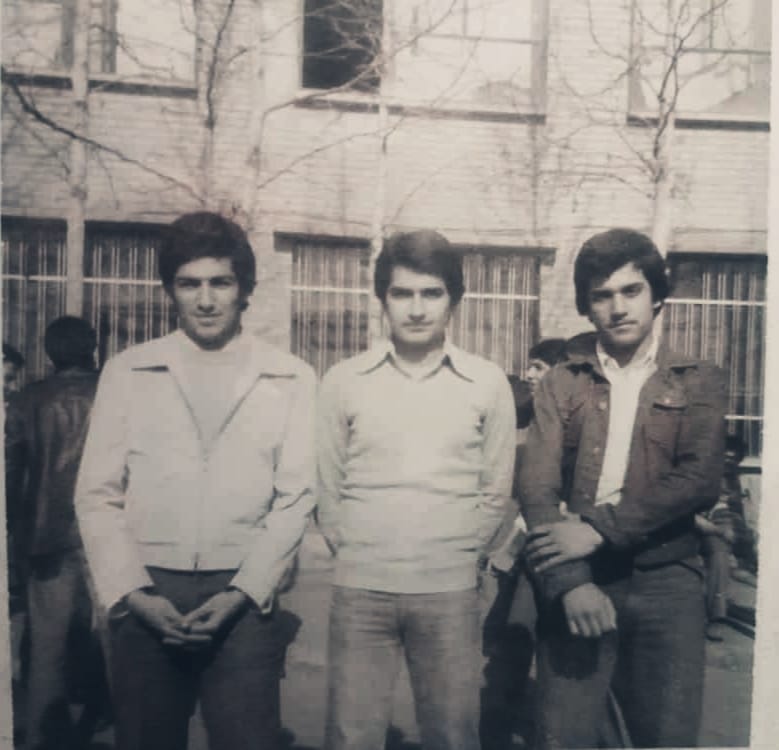
I was still in high school when the revolution erupted across Iran.
It was a time of electricity in the air—when the corrupt Shah, Mohammad Reza Pahlavi, was finally deposed after years of growing resentment. The streets pulsed with possibility. Every day, chants and drums echoed through the city, not in anger, but in something close to joy. Strangers helped one another. Old grievances dissolved. We believed, deeply, that change was coming—and that it would bring freedom.
The Village That Welcomed Us
My best friend Bahram, a university student at Elm-o-Sanat, was involved in a youth initiative to bring real change to forgotten villages. Students, engineers, medics, and young idealists were traveling to remote areas to teach, heal, and build. It was simple but revolutionary: bring education, irrigation, and medicine to the people—without politics, without slogans, just service.
I joined without hesitation. In one of our first trips, a small village outside Tehran welcomed us like long-lost family. We taught children under tents. We dug canals that brought clean water to thirsty land. Mothers watched as children received vaccines for the first time. It felt like we were witnessing the birth of a new Iran—an Iran of dignity, hope, and unity.
When Fear Took Hold
But then came the whispers.
The local mullah grew uneasy. Fewer people were coming to the mosque. Children were learning to read. Mothers were asking questions. He claimed we were poisoning their traditions. That we would lead their children astray. He didn’t speak in sermons—he spoke in fear.
Soon, the village that had embraced us turned cold. The laughter quieted. The looks changed. And then, one night, we were attacked.
They came with tools, shouting that we were infidels. That we had turned their children against God. We left in silence—bruised, heartbroken, and confused.
Marked as Enemies of God
Back in the city, we sought understanding from the new authorities. But these were not civic leaders. They were clerics. Their questions weren’t about our work—they were about our prayers, our mosque attendance, our piety. One by one, we were interrogated. Friends disappeared. Some were arrested. One left us a final message before vanishing:
“They’ve called us Mohareb—enemies of God.”
I fled the only country I had ever known.
Exile and the Silence of Survival
In exile, I turned my back on everything—on religion, on hope, on the broken promise of revolution. I focused on survival. I learned the language, adapted to foreign systems, built a new life. I buried the past in work and study, numbing the ache of loss with progress.
For years, I kept my story quiet. I had no interest in theology. The word faith tasted bitter. My homeland felt unreachable.
The Awakening That Found Me
Then one day, by what seemed like chance, I met three Iranian students at a university campus in the United States. They were manning a booth, quietly inviting fellow Iranians to support the People’s Mojahedin Organization of Iran (PMOI/MEK). I stopped—out of habit, out of skepticism. But as they spoke of the ongoing resistance inside Iran, of the struggle to liberate our country from the mullahs' grip, something inside me stirred.
The feeling I had as a teenager—the belief that a better Iran was worth fighting for—wasn’t dead. It had only been wounded. Now, it was awake again.
Why I Write Today
This is not just a newsletter. Free Iran is the continuation of a mission that began in the dusty roads of a forgotten village—and was nearly extinguished by betrayal, brutality, and silence.
I write for those who never got to tell their story.
I write for Bahram, and for the friends who vanished into cells for loving their people too freely.
I write because I still believe in the promise we glimpsed back then: that Iran can belong to its people—not to tyrants, not to fanatics, and not to those who profit from their survival.
If you've read this far, perhaps you believe in that possibility too.
A Note to the Reader
Thank you—for taking the time to read this, and for your willingness to understand.
If you are a policymaker, researcher, journalist, or concerned global citizen, your engagement matters. In a world where far too many turn away, your attention is a quiet act of defiance.
It is my hope that this platform offers not only insight, but also a shared sense of responsibility—that what we understand, we cannot ignore, and what we witness, we are called to answer.
May our shared pursuit of truth help bring dignity where it has been denied, and build a world where people live free—not in fear, but in possibility.
— Jalal Arani